
Breast Augmentation vs Breast Lift: Which Is Right for You
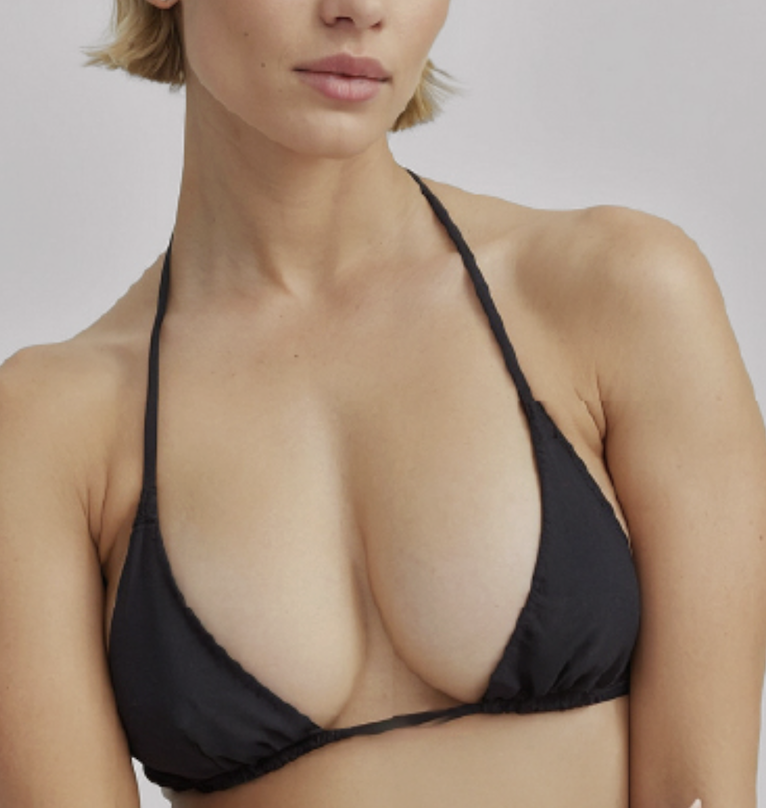
Breast Augmentation vs Breast Lift: Which Is Right for You?
By Dr Donald I. Altman, MD, MBA, MLS
What Is the Difference Between Breast Augmentation and a Breast Lift?
A breast augmentation adds volume using implants or implants combined with fat transfer, while a breast lift (mastopexy) reshapes and raises existing breast tissue without changing size. The right choice depends on whether your primary concern is increasing volume, sagging, or both. Combining the two procedures in a single surgical session is often the more precise solution when both concerns are present.
Deciding between a breast augmentation and a breast lift is one of the most common questions in a plastic surgery consultation, and it is also one of the most nuanced. The answer almost never comes from a checklist. It comes from a careful conversation about what you see in the mirror, what you hope to see after surgery, and what your anatomy will realistically support.
Both procedures address the breast, but they solve different problems. Understanding that distinction, clearly and honestly, is the foundation of every responsible surgical plan. The goal of this page is to walk you through that distinction in enough depth that you arrive at your consultation better prepared, with more specific questions, and with realistic expectations already beginning to take shape.
What Each Procedure Does
Breast Augmentation
A breast augmentation increases the size and projection of your breasts, most commonly through the placement of silicone implants. In selected patients, autologous fat transfer (using your own fat, harvested by liposuction) is an alternative that offers a more modest size increase with no implant or Hybrid breast augmentation which uses a combination implant and fat transfer.
When you choose implants, you and your surgeon will make decisions across several dimensions: implant material (silicone gel or saline), profile (how much the implant projects forward), shape (round or anatomic/teardrop), surface texture, and placement (above the pectoral muscle, partially behind it in a "dual-plane" position, or completely submuscular). Each choice depends on your unique anatomy, lifestyle and aesthetic goals.
What augmentation does not do is lift tissue that has descended. If your nipples sit below the fold of your breast, or if significant skin laxity has developed, placing an implant alone will make your breasts larger but will not correct the ptosis (the medical term for drooping). That is a critical distinction, and one worth sitting with before you form a preference.
Breast Lift (Mastopexy)
A mastopexy reshapes the breast by removing excess skin, repositioning the nipple-areola complex to a higher, more forward-projecting position, and tightening the remaining breast envelope. The internal breast tissue is often reshaped as well, creating a more rounded, youthful contour.
What a lift does not do is add volume. If you have lost breast fullness (often after pregnancy, breastfeeding, or weight loss), a lift will reposition what you have, but it will not replace what is gone. Patients who pursue a lift alone and then find themselves disappointed have typically experienced exactly this: the shape is improved, but the upper-pole fullness they hoped to restore remains absent.
Understanding this distinction is not a reason to pursue one procedure over the other. It is a reason to understand and communicate precisely about what is bothering you most.
How to Tell Which You Need
The clinical assessment of breast ptosis relies on the relationship between the nipple, the areola, and the inframammary fold (the crease where the underside of the breast meets the chest wall). In a non-ptotic breast, the nipple sits at or above the fold. As ptosis develops, the nipple descends relative to that fold.
Surgeons typically classify ptosis in three grades:
- Grade I (mild): The nipple is at the level of the fold.
- Grade II (moderate): The nipple is 1 to 3 centimeters below the fold but still above the lowest point of breast tissue.
- Grade III (severe): The nipple is more than 3 centimeters below the fold, often pointing downward.
A fourth category, sometimes called pseudoptosis, describes a breast in which the nipple sits at or above the fold but the lower pole of the breast has descended significantly, creating a "bottomed out" appearance.
{{a breast lift gives a more perky, youthful appearance} - Dr Kyle Song, MD, South Coast Plastic Surgery
In practice, here is how to think through your situation:
You are likely a breast augmentation candidate if:
- Your nipple sits at or above the inframammary fold.
- Your primary concern is size or upper-pole fullness, not position.
- Your skin has reasonable elasticity with minimal excess.
- You have deflation without significant descent (common after weight loss without major ptosis).
You are likely a breast lift candidate if:
- Your nipple has descended below the fold.
- You have significant skin excess or laxity.
- You are satisfied with your natural breast volume but not with the shape or position.
- Pregnancy, breastfeeding, or aging have left you with tissue that has lost its structural support.
You may need both if:
- Your nipple has descended and you have also lost upper-pole volume.
- You want a larger, higher, and fuller result that augmentation or lift alone cannot deliver.
A useful self-assessment: stand in front of a mirror in a relaxed, upright posture. Place a pencil under your breast at the fold. If your nipple sits below that pencil without the pencil falling, some degree of ptosis is present. This is a starting point for a conversation, not a surgical plan, but it helps frame the issue before you walk into a consult room.
When to Combine Both
An augmentation-mastopexy (performing both procedures together) is among the more technically demanding operations in breast surgery.
At South Coast Plastic Surgery, combined cases are approached with particular conservatism. If your anatomy suggests that performing both procedures simultaneously carries meaningful risk, your surgeon may recommend staging them: the lift first, followed by augmentation several months later once the tissues have stabilized.
Combined augmentation-mastopexy is the right choice when:
- You have Grade II or Grade III ptosis alongside meaningful volume loss.
- You have had a prior augmentation and the implants have descended along with the natural tissue ("double bubble" or "bottoming out").
- Post-partum changes have left you with both deflation and descent.
- You want to address shape, position, and volume in one surgical episode and your tissue quality supports doing so safely.
In these cases, the implant is typically placed first, and the lift is then tailored around it. The implant profile and size are chosen conservatively to minimize tension on the lift closure, which is the most common technical error in combined cases.
Recovery Comparison
Your recovery experience will differ depending on which procedure you have, and knowing what to expect helps you plan realistically.
After Breast Augmentation Alone
- Week 1: You will experience soreness, swelling, and tightness, particularly if implants are placed behind the muscle. Most patients manage discomfort well with prescribed oral medication. You should rest, avoid lifting anything over five pounds, and keep your upper body elevated.
- Weeks 2 to 3: Soreness decreases significantly. Most desk-work patients return within 7 to 14 days, though individual recovery varies. Continue to avoid strenuous activity during this period.
- Weeks 4 to 6: You can typically resume light exercise. Implants continue to settle and soften during this period.
- 3 to 6 months: The final shape and position become fully apparent as swelling resolves and implants drop into their natural position.
After Breast Lift Alone
- Week 1: You will have surgical dressings and possibly small drainage tubes. Soreness is present but often less intense than with submuscular implant placement. Your breasts will be swollen and higher than their final position.
- Weeks 2 to 4: Swelling and bruising subside. Incision lines are pink and will remain so for several months. You should avoid heavy lifting and overhead activity.
- Weeks 4 to 6: Most patients return to non-strenuous exercise. Final shape continues to evolve.
- 6 to 12 months: Scars mature and fade. Final position and contour are established.
After Combined Augmentation-Mastopexy
Recovery from a combined procedure encompasses elements of both. You should expect a somewhat longer period of activity restriction and a greater degree of early swelling. At South Coast Plastic Surgery, patients undergoing combined cases are typically advised to plan for two weeks of limited activity and to give the full result six months before drawing firm conclusions about the outcome.
Scar Locations Explained
Scarring is a concern for most patients considering breast surgery, and it is a subject that deserves transparency. Scars are permanent. They fade substantially over 12 to 18 months, and the majority of patients find the trade-off entirely acceptable when it is understood in advance. Surprises are avoidable.
Augmentation Scars
Breast augmentation is performed through one of three incision approaches:
- Inframammary (fold) incision: A short incision (typically 4 to 5 centimeters) placed in the natural crease beneath the breast. This is the most common approach because it offers the surgeon excellent visibility and is well-concealed.
- Periareolar incision: Placed at the border between the areola and surrounding skin. This scar can be quite inconspicuous but requires the areola to be large enough to admit the implant, and there is some evidence of higher rates of capsular contracture with this approach.
- Transaxillary (armpit) incision: Placed in the axilla, leaving no scar on the breast itself. This approach requires endoscopic assistance and limits the surgeon's control during placement.
Lift Scars
Mastopexy scars vary depending on the degree of ptosis being corrected:
- Crescent lift: A small, semicircular incision along the upper half of the areola border. Appropriate only for very mild ptosis and offers limited correction.
- Periareolar (donut) lift: A circular incision around the full areola. It offers modest correction and may cause the areola to widen over time if tension is not managed carefully.
- Vertical (lollipop) lift: An incision around the areola plus a vertical line from the areola to the fold. The workhorse of moderate ptosis correction.
- Inverted-T (anchor) lift: Adds a horizontal incision along the inframammary fold to the vertical lift pattern. Necessary for significant ptosis or significant excess skin. The most powerful correction, with the most extensive scar pattern.
In a combined augmentation-mastopexy, the scar pattern is determined by the degree of lift required, not by the augmentation component.
Booking Your Consult
The decision between augmentation and lift is not one you should be expected to make before you sit down with a surgeon. What you should do is arrive at your consultation having thought carefully about which aspect of your breast appearance concerns you most: size, position, or both. Bring photographs that represent your goal if they are helpful to you. Be honest about your medical history, including prior pregnancies, breastfeeding, and any significant weight changes.
At South Coast Plastic Surgery, Dr Kyle Song uses 3D simulation to help you visualize potential outcomes before any decisions are made. This 3D imaging process is a tool for communication, not a guarantee of results, but you may find it invaluable for clarifying your goals and aligning your expectations with what surgery can realistically deliver.
We encourage you to ask about financing options during your consultation.
Your consultation is the beginning of a relationship, not a sales transaction. The philosophy here has been consistent across decades: ensure patient safety, align surgical goals with realistic expectations, and proceed conservatively. If a procedure is not right for you, the honest answer is to say so.
Individual results vary.
Information on this page is for educational purposes and is not medical advice.
Reviewed by Dr Kyle Song, MD, South Coast Plastic Surgery.

Start Your Aesthetic Journey With South Coast Plastic Surgery
At our practice, we prioritize your health and well-being. Our dedicated team is here to guide you every step of the way.